

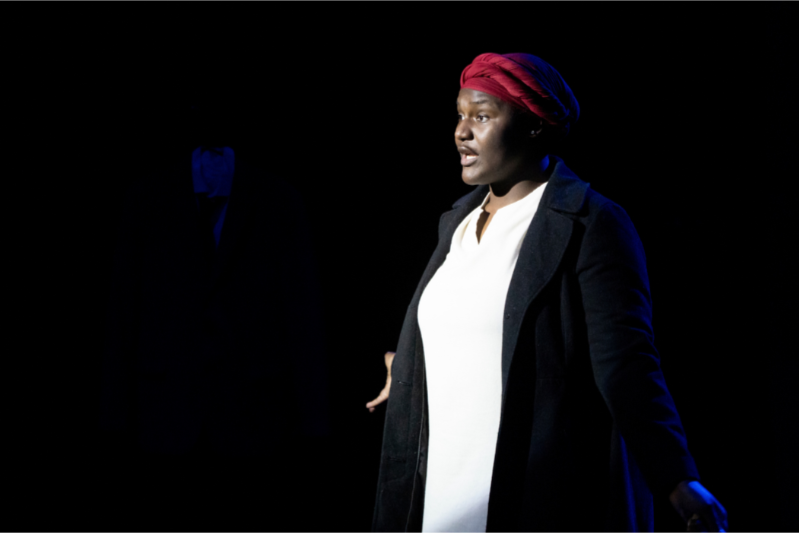
On Reimagining Harriet Tubman: Art, Memory, and the Politics of Discomfort
When historical figures are flattened into icons, we lose their humanity. This op-ed examines reimagining Harriet Tubman, the politics of embodiment, and why discomfort in art is not disrespect but inquiry.
In recent weeks, Harriet Tubman: Love Slave has generated both engagement and criticism. The backlash is not surprising. When artists approach sacred historical figures through contemporary lenses, the response often reveals less about the work itself and more about what we believe history is permitted to be.
This is not a defense rooted in provocation. It is an argument grounded in scholarship, artistic lineage, and media literacy.
Harriet Tubman has long occupied a mythic space in the American imagination. She is often rendered as immovable, fearless, divinely ordained. Reverence, however, can become erasure. When we flatten individuals into icons, we remove the interior life that made their choices radical in the first place.
Harriet Tubman: Love Slave interrogates the conditions that shaped her. It situates intimacy within the legal architecture of enslavement. To examine love under captivity is not exploitation. It is inquiry.
The title reflects the violent legal reality of chattel slavery, in which Black women’s bodies were commodified. Sanitizing that language for comfort would be historically dishonest.
Some criticism has centered not only on the title but on the work’s use of rap, percussive rhythm, and contemporary movement language. For some viewers, the presence of hip-hop cadences or embodied choreography feels incongruent with a nineteenth-century figure. That reaction itself is revealing.
Black expressive forms have always functioned as counter-archives. Spirituals, blues, jazz, spoken word, and hip-hop are not departures from history; they are continuations of it. Rap, in particular, operates as a modern extension of oral tradition, compressing narrative, resistance, memory, and coded testimony into rhythm and breath.
To place Harriet Tubman within a sonic and physical vocabulary that resonates with contemporary Black culture is not an attempt at sensationalism. It is an assertion that historical memory is not frozen in sepia tone. It lives in the bodies and languages of those who inherit it.
Movement, including moments that some have reductively labeled as “twerking,” must also be understood within the politics of the Black body. Throughout American history, Black women’s bodies have been surveilled, regulated, hypersexualized, and simultaneously desexualized. Respectability politics often demands stillness and restraint in order to secure legitimacy. Yet Black performance traditions have consistently reclaimed the body as site of agency, pleasure, and resistance.
To deny historical figures access to embodied expression in performance is to reimpose a rigidity that history itself did not grant them.
The question becomes: who determines which aesthetic forms are appropriate for historical memory? And why are certain contemporary Black forms deemed irreverent while Eurocentric reinterpretations are celebrated as innovative?
Reimagining is not revisionism. It is critical engagement.
I hold a Master of Science in Digital Media Management from the USC Annenberg School of Communication and Journalism, where I studied narrative framing and the political economy of attention. In digital ecosystems, backlash follows predictable patterns: a provocative headline circulates, context compresses, commentary accelerates, and nuance struggles to keep pace. Cultural works become symbols within algorithmic debate.
Yet few critiques have engaged the dramaturgical questions at the center of the production:
What does intimacy look like under surveillance?
What does marriage mean within legal non-personhood?
How does personal attachment complicate revolutionary action?
These are not tabloid inquiries. They are scholarly ones.
Theatre has historically been a space where societies examine their anxieties. Greek tragedy reworked myth to confront power. Shakespeare destabilized monarchy through psychological interiority. Black playwrights across generations have reinterpreted American history through speculative and revisionist lenses.
To demand comfort from theatre is to misunderstand its function.
If this production provokes debate about how we remember, who we sanctify, and what forms of Black expression we deem permissible in sacred narrative space, then it is participating in a long tradition of cultural argument.
Art is not a monument.
It is an argument.
And arguments, when grounded in rigor and lineage, belong in the public square.
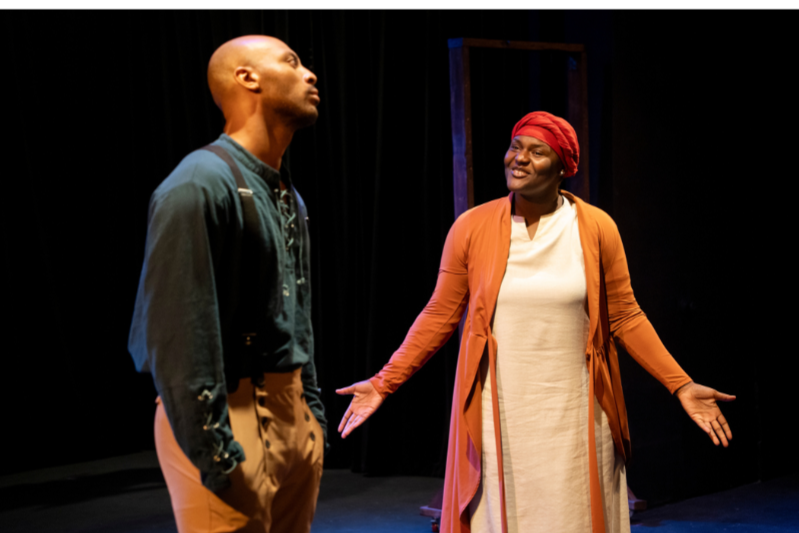
Why Reimagining Harriet Tubman Still Matters in 2026
Reimagining Harriet Tubman is not revisionism. It is engagement. In 2026, interrogating myth, memory, and interiority remains essential to how we understand liberation.
Harriet Tubman has long occupied a mythic space in the American imagination.
She is often rendered as fearless, immovable, divinely ordained. But before she was legend, she was human.
Harriet Tubman: Love Slave explores the emotional and relational dimensions of her early life. It considers marriage, vulnerability, and the psychological terrain of choosing freedom over familiarity.
This work does not seek to diminish her legacy. It seeks to humanize it.
When historical figures are flattened into icons, we lose the complexity that made their choices radical. By exploring Harriet’s interior life, we invite audiences to see liberation not as myth, but as a series of difficult, embodied decisions.
In 2026, conversations around autonomy, agency, and historical memory remain urgent. Revisiting Harriet Tubman through a contemporary lens is not revisionism. It is engagement.
Engagement keeps legacy alive.